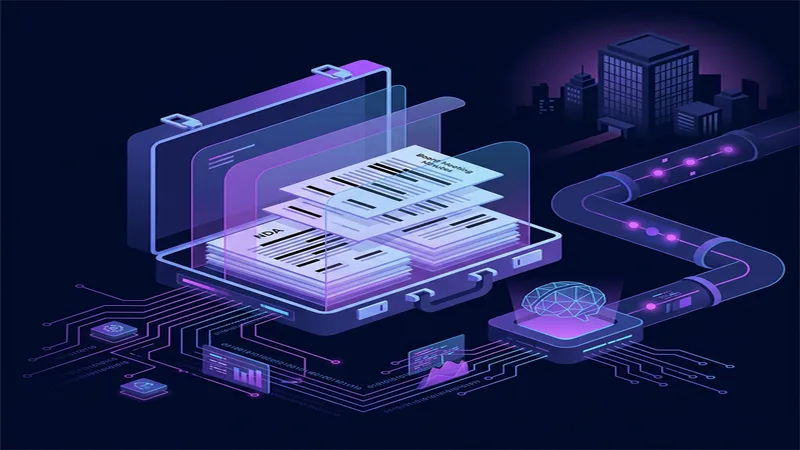
Internal & Board Documents
Vendor, Procurement & BI
of executives use AI for strategic decision support at least weekly
— McKinsey Global AI Survey 2024
Business operations teams deal with the most sensitive internal documents a company produces: board minutes, M&A term sheets, vendor contracts, and strategic plans. NDA and contract redaction for AI before AI analysis is a fiduciary and legal obligation, not just a best practice. Board deliberations are subject to director confidentiality duties; M&A information carries insider trading implications; vendor terms are often contractually required to be kept confidential.
The compliance frameworks relevant here overlap with SOC 2 security frameworks on the security side and secure AI contract analysis on the legal side. Enterprise AI plans from major providers do not guarantee that prompts remain outside of safety reviewing — making local pseudonymization the only technically verifiable protection.
Why Zero-Trust Beats Every Alternative
How PrivacyScrubber compares to common approaches in Biz workflows.
| Approach | PII sent to AI? | Reversible? | Compliance-safe? |
|---|---|---|---|
| Raw board docs into AI | ✅ yes | ❌ no | ❌ no |
| Enterprise AI with DPA only | ✅ yes | ❌ no | partial |
| PrivacyScrubber ZTDS | ❌ never | ✅ yes | ✅ yes |
Try PrivacyScrubber Free
No account. No install. Works fully offline. Your Biz data never leaves your browser.
How to Use AI Safely in 3 Steps
The zero-trust workflow for this field — verified by airplane mode test.
Scrub all party and project identifiers
Paste board minutes, NDAs, or vendor contracts into PrivacyScrubber. Party names, project code names, financial figures tied to named entities, and strategic decision references are tokenized locally.
Use AI for drafting, summarization, or review
The AI provides legal clause suggestions, executive summary drafts, and procurement comparison analysis — without knowing the parties, project names, or deal values.
Restore for final approval workflow
Reinsert real names and values in PrivacyScrubber for the final document version that enters your approval workflow. The AI never held the sensitive context.
Frequently Asked Questions
Common questions about AI data privacy in this field, answered.
Do AI tools retain the content of board meeting summaries?
Commercial AI providers may retain prompts for safety review or model improvement depending on their terms of service and your account type. Enterprise plans typically offer stronger protections — but the only way to guarantee board content does not leave your device is local pseudonymization before any AI call.
Can pasting M&A information into AI create insider trading liability?
Potentially. If a prompt contains material non-public information (MNPI) about a pending acquisition and that information reaches an AI provider's servers, the chain of custody becomes legally significant. Redacting company names, deal values, and transaction timing before AI analysis removes the MNPI from the prompt.
What business documents carry the highest AI disclosure risk?
Board minutes, audit committee reports, M&A term sheets, strategic plan documents, compensation data, unreleased financial results, and vendor contracts with confidentiality clauses.
Is it enough to use an enterprise AI plan with a DPA?
A DPA contractually limits vendor data use but does not prevent transmission. Local pseudonymization eliminates the transmission of sensitive data — making the DPA question moot for that processing activity.
Key Terms in Biz AI Privacy
Definitions that matter for understanding PII risk in biz workflows.
- Board Confidentiality
- The fiduciary and legal duty to protect deliberative information from unauthorized disclosure. AI tools that retain chat history present a confidentiality risk.
- Trade Secret
- Commercially valuable information that derives value from being kept secret. AI prompts containing trade secrets may be logged and used by AI providers under their terms of service.
- NDA (Non-Disclosure Agreement)
- A contract preventing disclosure of specified information. Anonymizing party names before AI review ensures the NDA itself does not become a data exposure vehicle.
- Data Classification
- The process of categorizing data by sensitivity (public, internal, confidential, restricted). AI processing policies should align with data classification levels.