Client Confidentiality & Privilege
Document Redaction
Specialized Practice Areas
of AmLaw 100 firms now use generative AI for legal work
— ABA TechReport 2024
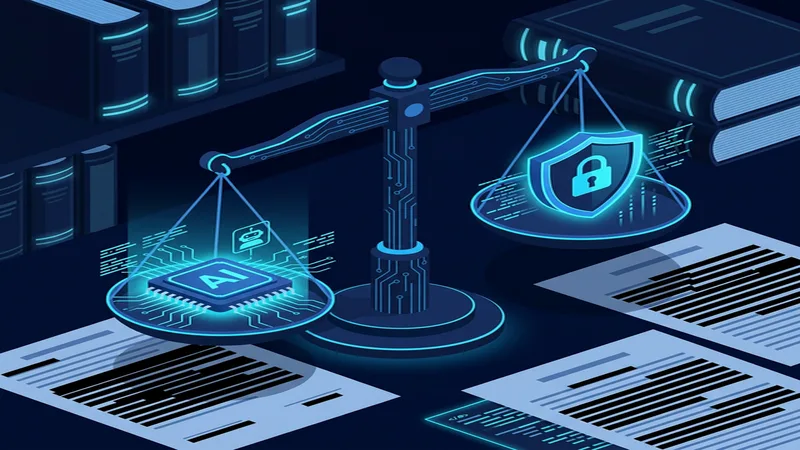
Attorneys face a unique tension: AI tools dramatically accelerate legal research, drafting, and court document redaction for AI, yet every prompt sent to a commercial LLM potentially waives attorney-client privilege. ABA Model Rule 1.6 requires lawyers to take reasonable measures to prevent inadvertent disclosure — and pasting raw client communications into ChatGPT or Claude is not a reasonable measure.
The compliance framework is clear: under GDPR and CCPA compliance, transmitting client PII to a third-party AI provider constitutes processing that requires a lawful basis. Zero-trust local tokenization — replacing real names, email addresses, and matter identifiers with neutral placeholders before the prompt — satisfies both obligation streams simultaneously. Understanding PII redaction standards is the technical foundation every legal team needs before evaluating any AI tool.
Why Zero-Trust Beats Every Alternative
How PrivacyScrubber compares to common approaches in Legal workflows.
| Approach | PII sent to AI? | Reversible? | Compliance-safe? |
|---|---|---|---|
| Paste raw documents into AI | ✅ yes | ❌ no | ❌ no |
| Manual black-box redaction | partial | ❌ no | partial |
| PrivacyScrubber ZTDS | ❌ never | ✅ yes | ✅ yes |
Try PrivacyScrubber Free
No account. No install. Works fully offline. Your Legal data never leaves your browser.
How to Use AI Safely in 3 Steps
The zero-trust workflow for this field — verified by airplane mode test.
Identify all PII fields in the document
Names, email addresses, bar numbers, case IDs, and opposing party details must all be flagged before the prompt is composed.
Tokenize locally before copying to AI
Paste your text into PrivacyScrubber. The engine replaces each identifier with a structured token ([NAME_1], [EMAIL_2]) entirely inside your browser. Zero bytes leave your device.
Paste the scrubbed text into your AI tool
The AI sees only tokens — never real client data. When the response arrives, paste it back to restore original values using your session map.
Frequently Asked Questions
Common questions about AI data privacy in this field, answered.
Does using AI for legal drafting violate attorney-client privilege?
Not inherently — but pasting raw client data into a commercial AI provider's API does create disclosure risk under Model Rule 1.6. Local tokenization before the prompt removes the risk entirely: the AI never sees identifiable client information.
What PII should lawyers redact before using ChatGPT or Claude?
Full names, email addresses, phone numbers, matter numbers, case references, opposing party identifiers, court names linked to specific clients, and any financial figures that would identify a client's transaction.
Is attorney-client privilege waived if client data reaches an AI server?
Courts have not uniformly ruled on this yet, but the risk is real. Several bar associations have issued ethics opinions requiring confidentiality measures. Local PII redaction before any AI session is the only approach that eliminates the risk rather than mitigating it.
Can law firms pass a SOC 2 audit if attorneys use AI tools?
Yes, if the firm's AI usage policy requires local PII scrubbing before prompts. The session map never leaves the device, which means there is no third-party data flow to audit or remediate.
Key Terms in Legal AI Privacy
Definitions that matter for understanding PII risk in legal workflows.
- Attorney-Client Privilege
- The legal protection that keeps communications between attorney and client confidential. Transmitting these to an AI training pipeline may waive the privilege.
- PII Redaction
- Replacing personally identifiable information with structured placeholders (e.g. [NAME_1]) before processing. No data is removed — it is tokenized and reversible.
- Pseudonymization
- Replacing direct identifiers with a token. Unlike anonymization, the original value can be recovered with a key — PrivacyScrubber's session map serves this role.
- Third-Party AI Risk
- The GDPR and US bar ethics concern that arises when client data is transmitted to an external AI provider's servers, where data retention policies may not align with legal duties.