AI-Generated Content as Legal Evidence: Data Privacy Risks
Courts are seeing AI-generated summaries used as evidence. Understand the data privacy chain-of-custody risks when AI processes confidential legal documents.
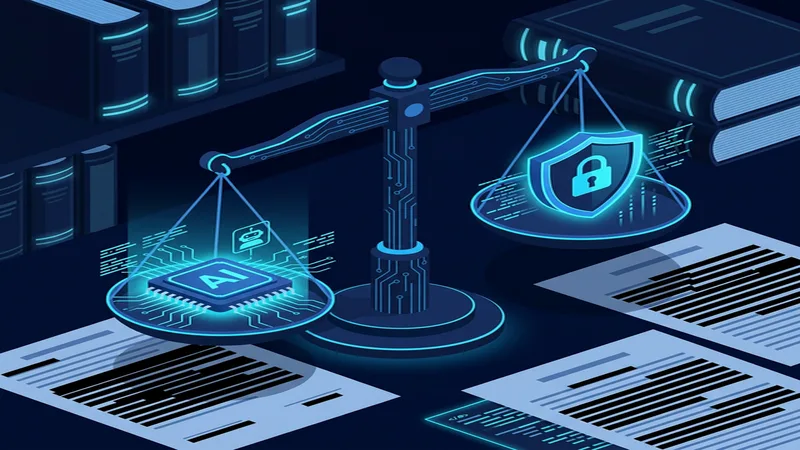
The AI Privacy Risk in Legal
AI-Generated Content as Legal Evidence: Data Privacy Risks is a growing challenge for attorneys, paralegals, and legal operations professionals. As AI tools like ChatGPT, Claude, Copilot, and AI legal research platforms become standard in the legal workflow, the question is no longer whether to use AI — it is how to use it without exposing sensitive data. Our legal AI privacy guides cover every workflow in depth. The core risk: exposing client communications, case strategy, and witness identities to AI training pipelines, which could constitute a privilege waiver and bar discipline violation.
Every time you paste legal content into an AI chatbot, you create a potential data trail. Major AI providers' terms of service allow them to use inputs to improve models, and their privacy settings change frequently. For attorneys, paralegals, and legal operations professionals, the exposure vector is the prompt itself — not just the AI's response. Courts are seeing AI-generated summaries used as evidence. Understand the data privacy chain-of-custody risks when AI processes confidential legal documents.
Regulatory Context
The regulatory framework for legal is clear: attorney-client privilege (Model Rule 1.6), court confidentiality rules, and state bar ethics opinions on third-party AI use. What is less clear — and what most professionals get wrong — is whether using AI constitutes a violation when you have not read the provider's data retention policy in detail. This concern is directly related to redacting scanned depositions for AI — understanding the full surface area of data exposure is the first step to safe AI adoption. The safest answer is to never send identifiable data in the first place.
The Zero-Trust Solution
PrivacyScrubber solves the AI legal evidence privacy problem at the source. As an enterprise-grade data masking tool and text anonymization tool, it ensures that before any data reaches an AI model, it passes through a local tokenization engine that replaces all PII with structured placeholders: [NAME_1], [EMAIL_1], [ID_1]. The AI sees only anonymized content. This approach mirrors best practices in GDPR and CCPA compliance — the principle that data should be minimized before it reaches any external system, not after. After the AI generates its output, paste the response back and click Un-mask — all original values are restored instantly from an encrypted in-memory session map wiped on page close.
The zero-transmission claim is independently verifiable. Open Chrome DevTools, go to the Network tab, filter by Fetch/XHR, and run a full scrub-and-restore cycle. You will see zero outbound requests. Enable Airplane Mode and the tool works identically — a principle aligned with sanitizing scanned tax returns that every compliance framework endorses: process data locally, transmit nothing identifiable.
Is ChatGPT Safe for Confidential Data? Here's the Only Safe Workflow.
Read the full guide →3-Step Workflow
Paste & Scrub
Paste your legal document or text into PrivacyScrubber. Click Scrub PII. In under two seconds, all names, emails, phone numbers, and IDs are replaced with tokens like [NAME_1] and [EMAIL_1].
Send to AI
Copy the sanitized output into ChatGPT, Claude, Gemini, or any other AI tool. The AI processes only anonymized text. Your actual data never touches an external server.
Restore Instantly
Paste the AI's response back into PrivacyScrubber and click Un-mask. All original legal data is restored in the correct positions, ready to use.
Try It: Scrub Legal Data
Paste any text below to see local PII redaction in action (runs entirely in your browser).
Scrub PII from your toolbar
The free PrivacyScrubber Chrome Extension lets you highlight and scrub text on any tab before sending it to AI.
Try It Free — Right Now
No account. No install. Works offline. Your legal data stays on your device.
Frequently Asked Questions
Does anonymizing data before AI processing satisfy attorney-client privilege (Model Rule 1.6)?
Yes. Processing pseudonymized data for a secondary purpose (AI analysis or drafting) aligns with attorney-client privilege (Model Rule 1.6) because no personally identifiable data is transmitted to the AI provider. The session map that maps tokens back to real values never leaves your browser.
What specific PII does PrivacyScrubber detect for legal use cases?
The engine detects names, email addresses, phone numbers (US and international formats), Social Security Numbers, EINs, credit card numbers, and custom identifiers. PRO users can add custom regex rules to match legal-specific patterns such as AI legal evidence privacy.
Can PrivacyScrubber be used offline for AI legal evidence?
Yes. All processing runs in your browser's JavaScript engine. Once the page loads, enable Airplane Mode and verify in Chrome DevTools (Network tab) that zero outbound requests occur during a full scrub-and-restore cycle. All legal data stays entirely on your device.
Legal