Immigration Law AI Safety: Protect Visa & Passport Data TEAMS EDITION
Immigration cases involve passport data, addresses, and biometrics. Scrub before AI research tools.
PrivacyScrubber Team
Last updated:
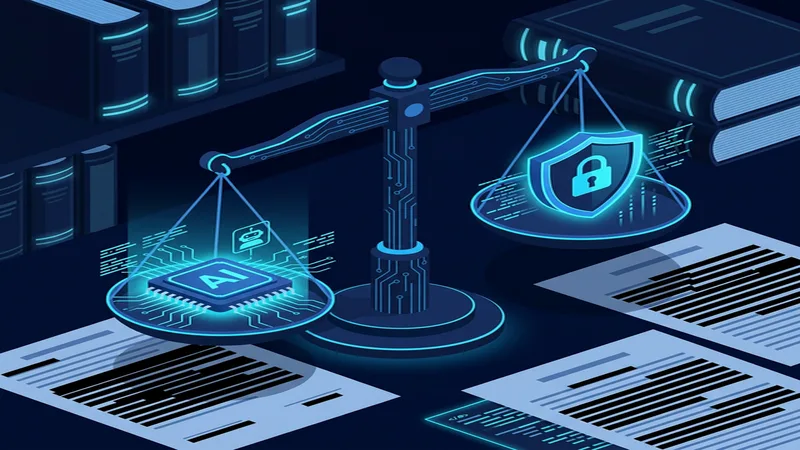
Key Takeaways for Legal
- Local Processing: All legal redaction happens entirely within your browser; zero data is sent to a server.
- Structured Tokenization: Replaces PII with semantic safe tokens (e.g., [NAME_1], [EMAIL_1]) before pasting into AI.
- Compliance Ready: Aligns with attorney-client privilege (Model Rule 1.6) data minimization requirements for secure AI usage.
The AI Privacy Risk in Legal
Immigration Law AI Safety: Protect Visa & Passport Data is a strategic priority for attorneys, paralegals, and legal operations professionals. As ChatGPT, Claude, Copilot, and AI legal research platforms integration deepens, the threat of unmanaged PII exfiltration to public LLM datasets is reaching a critical inflection point. Our legal AI privacy guides provide the technical roadmap for maintaining the legal perimeter while leveraging GenAI. The core vulnerability: exposing client communications, case strategy, and witness identities to AI training pipelines, which could constitute a privilege waiver and bar discipline violation.
Every prompt delivered to a third-party AI provider carrying legal records or immigration lawyer AI privacy data constitutes a potential non-disclosure violation. Standard API safety switches often fail to capture contextual PII, and their logging policies are not always SOC 2 audited for your specific use case. For attorneys, paralegals, and legal operations professionals, the exposure vector is the raw input stream. Immigration cases involve passport data, addresses, and biometrics. Scrub before AI research tools.
Regulatory Context
Regulatory oversight for the legal sector is explicit: attorney-client privilege (Model Rule 1.6), court confidentiality rules, and state bar ethics opinions on third-party AI use. However, technical compliance lags behind AI adoption curves. Navigating the data exposure surface often overlaps with protecting scanned depositions for AI — identifying how unstructured data becomes a permanent liability in model weights. To achieve verifiable security, you must eliminate the PII before it reaches the cloud.
The Zero-Trust Solution
PrivacyScrubber implements **Zero-Trust Data Sanitization (ZTDS)** at the browser intake layer. Our engine performs local Named Entity Recognition (NER) to replace sensitive identifiers with deterministic tokens (e.g., [NAME_1], [ID_2]) before transmission. This architectural pattern mirrors industry standards for GDPR and CCPA compliance — ensuring that only sanitized, non-identifiable logic is processed by the AI. Re-identification occurs locally in your encrypted RAM session, ensuring zero data persistence on our servers.
This zero-transmission architecture is independently auditable via our **Airplane Mode Standard**. By disconnecting your network and running a full scrub-and-restore cycle, you verify that no outbound packets are transmitted. This aligns with protecting scanned tax returns for hardened legal security: local execution is the only true guarantee of AI data privacy.
Zero-Trust Architecture
PrivacyScrubber operates entirely on your device. Unlike other PII protectors that send your data to their own servers to be hidden, we never see your text. All detection and restoration happens in your computer's local RAM.
- No Backend Connection: Zero API calls, zero tracking, zero logs.
- Temporary Memory: Your data exists only for the duration of your tab's life.
- Verification Ready: Built for professionals who need to audit their security layer.
Hardware-Level Verification
We encourage you to audit our zero-trust claims for immigration lawyer AI privacy using the Airplane Mode Test:
Open your browser's Network Monitor before you start scrubbing.
Switch to Airplane Mode (physical or simulated) and protect your text.
Verify that no data packets ever leave your machine.
Is ChatGPT Safe for Confidential Data? Here's the Only Safe Workflow.
Read the full guide →3-Step Workflow
-
Paste & Protect
Paste your legal document or text into PrivacyScrubber. Click Protect PII. In under two seconds, all names, emails, phone numbers, and IDs are replaced with tokens like [NAME_1] and [EMAIL_1].
-
Send to AI
Copy the sanitized output into ChatGPT, Claude, Gemini, or any other AI tool. The AI processes only anonymized text. Your actual data never touches an external server.
-
Restore Instantly
Paste the AI's response back into PrivacyScrubber and click Reveal. All original legal data is restored in the correct positions, ready to use.
Try It: Protect Legal Data
Paste any text below to see local PII redaction in action (runs entirely in your browser).
Protect data from your toolbar
The free PrivacyScrubber Chrome Extension lets you highlight and protect text on any tab before sending it to AI.
Try It Free — Right Now
No account. No install. Works offline. Your legal data stays on your device.