Securing the Pipeline
Architecture & Design
of developers use AI coding tools at least weekly
— Stack Overflow Developer Survey 2024
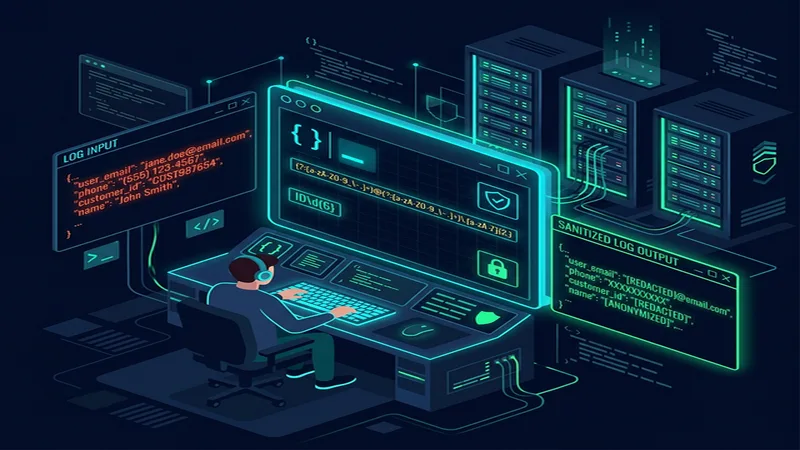
Developers are the tech-savviest AI users — and often the most exposed. Server logs, CI pipelines, and code review tools regularly contain user emails, internal IP addresses, API keys, and database connection strings. secure AI code review workflows is now a first-class engineering concern, not an afterthought. Pasting raw log output into an AI debugger exposes real user data and internal infrastructure to a commercial provider's data retention systems.
The solution is prompt-level sanitization. Integrating local PII scrubbing into the AI debugging workflow adds one step that prevents data from leaving the trust boundary. For teams building secure AI development pipelines, this becomes a prerequisite at every data ingestion point. The underlying mechanism is explained in our guide to regex-based data scrubbing.
Why Zero-Trust Beats Every Alternative
How PrivacyScrubber compares to common approaches in Dev workflows.
| Approach | PII sent to AI? | Reversible? | Compliance-safe? |
|---|---|---|---|
| Paste raw logs into AI debugger | ✅ yes | ❌ no | ❌ no |
| Grep-based manual log filtering | partial | ❌ no | partial |
| PrivacyScrubber ZTDS | ❌ never | ✅ yes | ✅ yes |
Try PrivacyScrubber Free
No account. No install. Works fully offline. Your Dev data never leaves your browser.
How to Use AI Safely in 3 Steps
The zero-trust workflow for this field — verified by airplane mode test.
Copy the log output or code snippet
Paste server logs, stack traces, or code into PrivacyScrubber. Emails, IPs, API keys, and user IDs are tokenized locally before you touch the AI tool.
Paste the sanitized text into your AI debugger
The AI sees the structure and logic of your logs without any real user data or infrastructure identifiers. Debugging quality is unchanged; exposure is eliminated.
Restore and apply the fix
When the AI identifies the bug, reinsert the original values from your session map to apply the fix in context — all in your browser, zero round-trips.
Frequently Asked Questions
Common questions about AI data privacy in this field, answered.
Can I paste server logs into ChatGPT for debugging?
You can, but you risk exposing user email addresses, internal IPs, session tokens, and database identifiers to OpenAI's servers. Local tokenization before pasting keeps the debug quality while removing all PII from the prompt.
Are API keys considered PII under GDPR?
API keys themselves are not personal data, but they often appear alongside user identifiers in logs. Both should be redacted before AI debugging sessions. Exposed API keys also represent a direct security risk.
What is the zero-trust principle for AI-assisted development?
Never pass raw production data — including logs, database exports, or user-generated content — to an external AI tool without first stripping all identifiers. Treat every AI API call as a public network boundary.
How does local PII scrubbing work in a CI/CD pipeline?
For automated pipelines, integrate a server-side scrubbing step before any AI code review or log analysis call. For ad-hoc developer use, PrivacyScrubber provides a browser-based scrub with no installation or API keys required.
Key Terms in Dev AI Privacy
Definitions that matter for understanding PII risk in dev workflows.
- Prompt Injection
- An attack where adversarial text in user input manipulates an LLM's behavior — extracting system prompts, bypassing safety filters, or leaking context data.
- RAG Exfiltration
- A data-leak vector where an attacker crafts queries that cause a RAG-enabled LLM to surface private documents from the vector store in its response.
- Local Tokenization
- Replacing PII with structured placeholders entirely inside the browser's JS engine. Zero bytes of raw PII transmitted over the network during the entire scrub cycle.
- Zero-Trust Architecture
- Security model where no system component is trusted by default. Applied to AI pipelines: never pass raw PII to an LLM; verify every data-flow boundary.
- Session Map
- PrivacyScrubber's in-memory object mapping tokens (e.g. [NAME_1]) back to original values. Lives only in RAM; destroyed on tab close. Never serialized to disk or server.