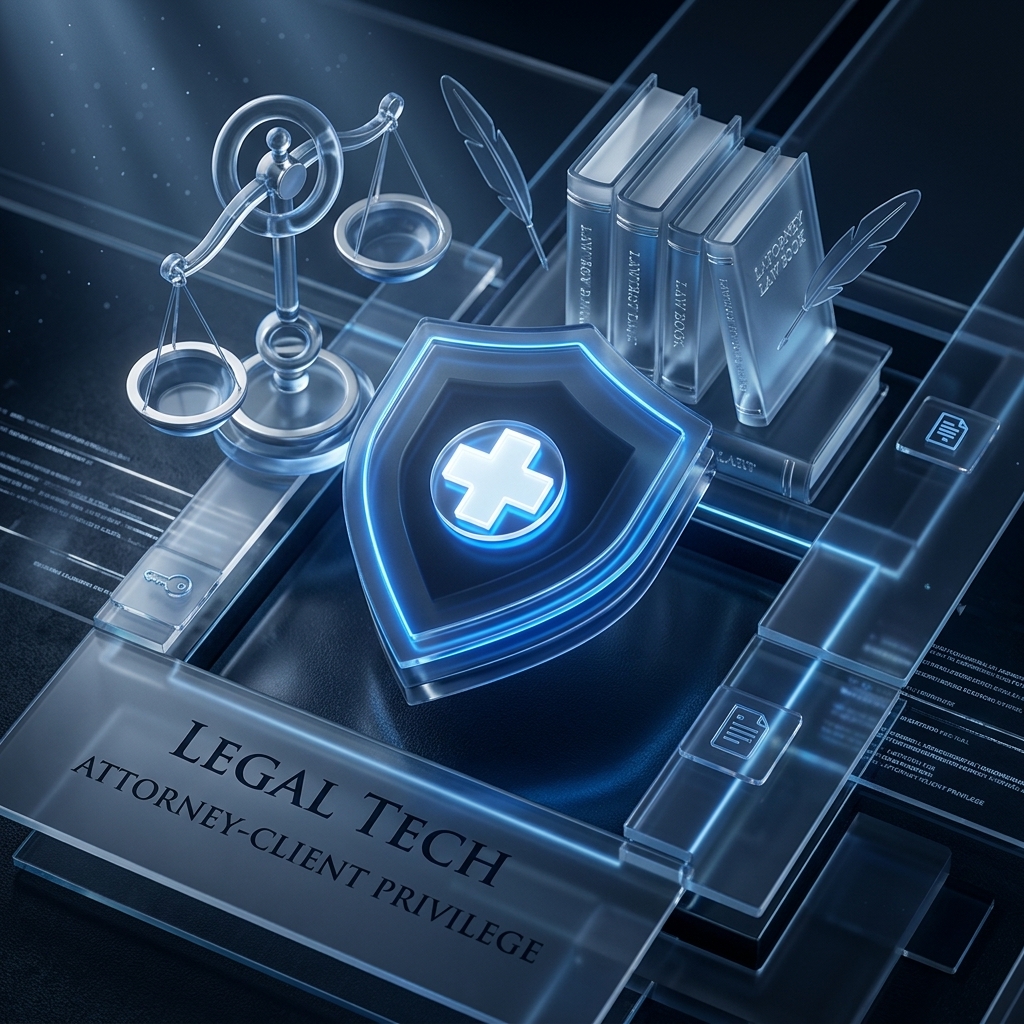





"Attorney-Client Privilege is the bedrock of the legal profession, yet it is uniquely vulnerable when lawyers upload unmasked case files into generative AI tools. Every time a deposition or NDA draft is pasted into public models like ChatGPT, you risk waiving confidentiality, potentially triggering ABA Rule 1.6 violations and jeopardizing high-stakes litigation. PrivacyScrubber introduces a mathematically secure, 100% offline sanitization bridge. It automatically redacts litigant names, financial settlements, and custom case numbers within your browser's local memory before the text ever connects to the cloud. You get the immense speed of AI legal review without compromising a single ounce of privilege."
Strategy Insight for Zero-Trust Leadership
Scaling AI adoption within Zero-Trust environments requires a fundamental shift in data governance. Our enterprise AI solutions ensure that while teams leverage high-velocity LLMs, the underlying legal data remains fully sovereign. This solution integrates directly with your Zero-Trust industry guides to provide a seamless privacy layer.
The core challenge for Zero-Trust leaders is balancing utility with liability. Standard Cloud DLP filters often strip too much context or require trust in third-party servers. PrivacyScrubber's zero-trust model for enterprise data governance preserves the semantic structure of your prompts locally, ensuring that AI reasoning remains accurate while personally identifiable information (PII) is deterministically masked.
Zero-Trust Critical Compliance Vulnerabilities
Uploading unmasked discovery files or NDA drafts to public AI models triggers a direct waiver of attorney-client privilege.
Manual redaction of privilege-heavy legal documents is dangerously slow, creating bottlenecks in litigation prep.
Generic cloud DLP tools lack the legal context to protect sensitive case numbers, witness details, and judge names.
Law firms risk disbarment and malpractice suits if confidential client secrets enter third-party AI training datasets.
PrivacyScrubber keeps all sanitization offline, mathematically guaranteeing compliance with ABA Model Rule 1.6.
Legal Vector Analysis & Risk Scenarios
Identifying the primary data exfiltration paths for Legal workflows using generative AI models.
Legal Input Neutralization
"Legal teams must protect case numbers, witness identities, and attorney-client privileged information before leveraging LLMs for discovery or deposition analysis. PrivacyScrubber enforces local redaction to prevent accidental waiver of privilege."
Instantly mask Legal identifiers in text, PDF, and DOCX files locally before transmission to any AI provider.
Hardware-level verification ensures no data packets leave your browser RAM session during the redaction process.
Audit Roadmap: Legacy Cloud-DLP vs. ZTDS
| Strategic Metric | Legacy Cloud-DLP | ZTDS (PrivacyScrubber) |
|---|---|---|
| Data Perimeter | Transmitted to Cloud API | 100% Local (Client-Side) |
| Processing Latency | 500ms - 2500ms (Network) | < 15ms (Native JS) |
| Security Posture | Trust-Based (SLA/BAA) | Math-Based (Zero-Server) |
| Compliance Status | Subject to Cloud Audit | Audit-Exempt (Local-Only) |
The Airplane Mode Standard
Disconnect your network, enable Airplane Mode, and watch PrivacyScrubber maintain 100% operational integrity. This is not just a feature—it is a mathematically verifiable proof that your Zero-Trust records never leave your control.
Solving Zero-Trust Challenges with Enterprise Governance
Scale Zero-Trust Data Sanitization across your entire organization with centralized enforcement and native browser integration.
CISO / Compliance
In the Zero-Trust sector, enforcing Zero-Trust is paramount. With the PrivacyScrubber Chrome Extension, administrators seamlessly deploy data masking via MDM to all endpoints. Preventing local model leakage ensures that when employees use GenAI, sensitive legal records are never exfiltrated to external LLM servers, instantly satisfying compliance and governance audits.
Operations Lead
Zero-Trust organizations require agile collaboration without compromising privacy. The Enterprise Governance model features encrypted Session Sharing, allowing CISOs and managers to securely distribute custom Regex dictionaries across the department. This enforces uniform data redaction standards across all GenAI workflows, eliminating human error while maintaining high velocity in team-based AI adoption.
Edge Analyst
Daily legal operations rely on continuous efficiency. The native extension automates PII scrubbing directly at the browser input field, ensuring analysts never waste time manually censoring data. This seamless integration provides zero friction and zero server latency, empowering end-users to confidently leverage ChatGPT and Claude for immediate Zero-Trust insights.