Hiring & Recruitment
Employee Data Protection
of HR leaders plan to implement AI screening tools by end of 2025
— Gartner HR Survey 2024
HR and recruitment teams are among the heaviest enterprise AI adopters — and among the most exposed to data privacy risk. GDPR-compliant AI hiring affects every résumé, performance review, and payroll record that touches an AI pipeline. GDPR Article 9 classifies candidate health, ethnicity, and biometric data as special-category — a designation that demands explicit legal basis before any AI tool may process it.
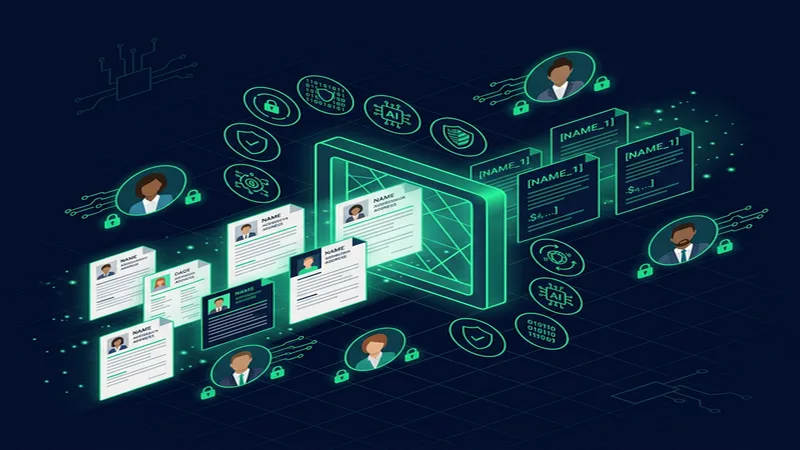
The solution is pseudonymization at the point of input. Just as confidentiality obligations in professional settings requires information to be protected from unauthorized disclosure, HR data must be tokenized before AI sees it. Local scrubbing satisfies both the data minimization and purpose limitation requirements without blocking AI adoption. Staying ahead of GDPR privacy standards means building this into your standard hiring workflow today.
Why Zero-Trust Beats Every Alternative
How PrivacyScrubber compares to common approaches in Hr workflows.
| Approach | PII sent to AI? | Reversible? | Compliance-safe? |
|---|---|---|---|
| AI screening with raw CVs | ✅ yes | ❌ no | ❌ no |
| Manual name removal | partial | ❌ no | partial |
| PrivacyScrubber ZTDS | ❌ never | ✅ yes | ✅ yes |
Try PrivacyScrubber Free
No account. No install. Works fully offline. Your Hr data never leaves your browser.
How to Use AI Safely in 3 Steps
The zero-trust workflow for this field — verified by airplane mode test.
Strip candidate identifiers from CVs
Copy the résumé text into PrivacyScrubber. Names, addresses, phone numbers, and email addresses are tokenized instantly in your browser.
Run AI screening on the anonymized text
Paste the scrubbed résumé into your AI scoring or summarization tool. The model evaluates skills and experience — not demographic signals.
Restore identifiers after selection
Once the AI shortlist is generated, paste the response back into PrivacyScrubber to restore real candidate names for the interview stage.
Frequently Asked Questions
Common questions about AI data privacy in this field, answered.
Is AI-based CV screening GDPR-compliant?
It can be, if candidate data is pseudonymized before the AI processes it. Using raw CVs with a commercial AI provider requires a lawful basis, a Data Processing Agreement, and often explicit candidate consent for AI evaluation.
Can anonymizing résumés reduce hiring bias?
Yes. Removing names, addresses, graduation years, and photos before AI screening eliminates demographic signals that have been shown to introduce bias in automated shortlisting. The AI evaluates competencies only.
Does GDPR apply to AI tools used in recruitment?
Yes. Any processing of EU candidate data — including sending it to an AI provider — must have a lawful basis under Article 6. Special-category data (Article 9) requires explicit consent or another specific condition.
What happens to candidate data inside an AI tool?
Commercial AI providers may retain prompts for safety review, model improvement, or abuse detection — depending on their terms of service. Local tokenization prevents candidate PII from ever reaching those retention systems.
Key Terms in Hr AI Privacy
Definitions that matter for understanding PII risk in hr workflows.
- Bias Mitigation
- Removing demographic signals (name, gender, age, address) from resumes before AI screening to reduce discriminatory patterns in automated decisions.
- GDPR Article 9
- The regulation governing special-category personal data (health, ethnicity, religion). Highly relevant for HR AI that processes employee or candidate records.
- Data Subject
- Under GDPR, the identified or identifiable natural person whose data is being processed — in HR context, the candidate or employee.
- Processing Purpose Limitation
- GDPR principle requiring that data collected for one purpose (hiring) is not reused for another (AI model training) without fresh consent.